When Capacity Changes, Boundaries Become Architecture
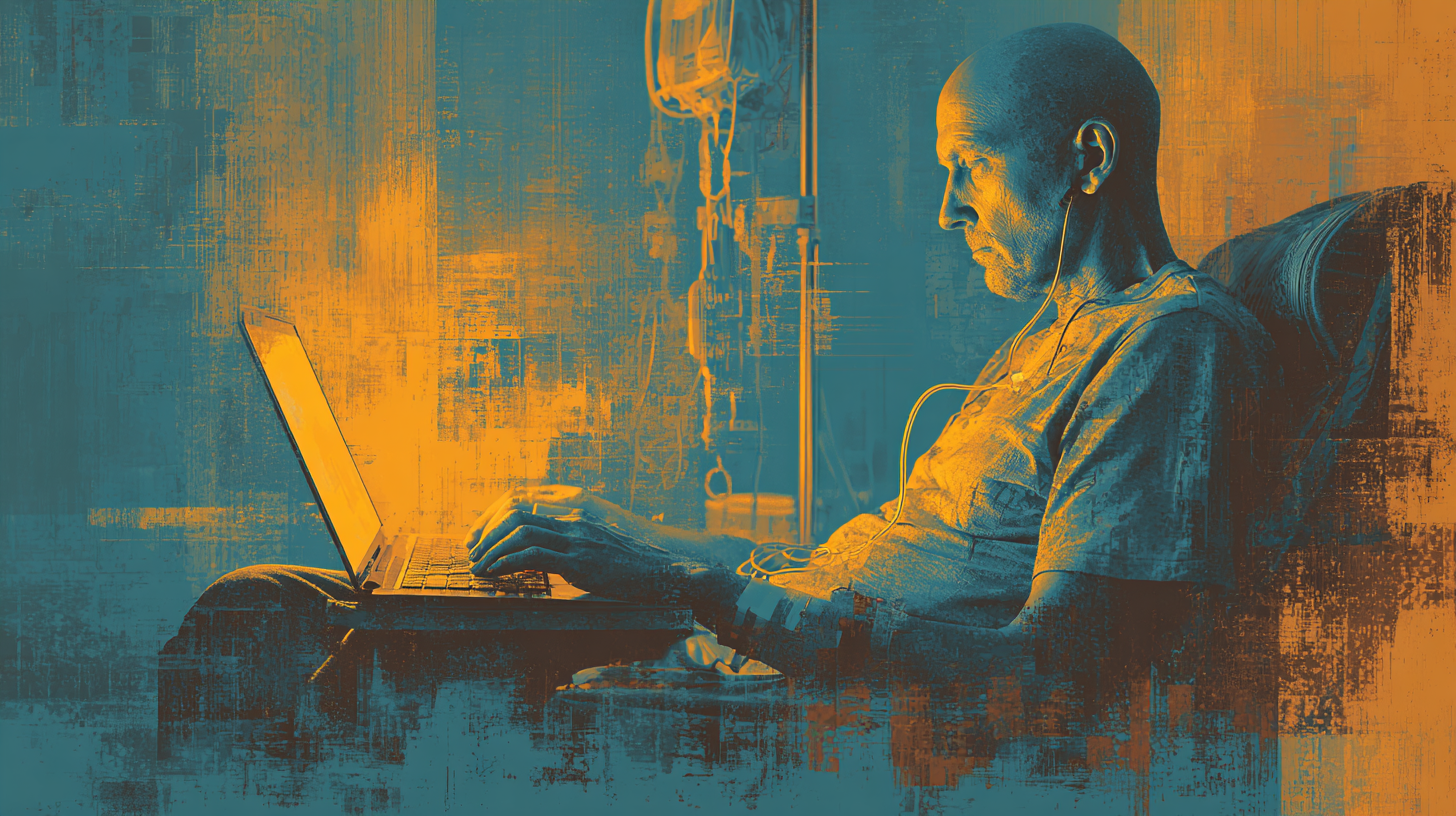
During my third round of chemo, while the chemo drugs were being infused through my port, a feature flag failed.
At the time, I did not feel like there was anyone else to back me up.
The failure created enough instability that I shut the functionality off completely to contain it, then started working toward what looked like the only viable recovery path: a full overhaul of the system.
I still do not know with certainty whether that was the best technical call.
I suspect there were other options.
Narrower containment. Partial rollback. A more surgical recovery path.
But I did not recognize them.
That is the part I keep returning to.
Not just because the incident mattered, but because it exposed something about how I was operating.
I was treating a season of drastically reduced capacity as if it were a normal load condition.
Chemo and cancer do not just create pain. They change the operating environment. They reduce margin. They slow recovery. They make concentration more expensive. They raise the cost of ordinary mistakes and lower the threshold for cascading ones.
I knew that in theory.
I had not fully respected it in practice.
And that gap showed up under pressure.
Tunnel Vision
Under enough strain, human perception narrows.
We know this from emergency response, trauma, and overload states: attention locks, peripheral information fades, alternatives get harder to see, and everything outside the immediate focal point starts to disappear.
That’s where I was.
The failing functionality became the whole field of view. Contain it. Shut it down. Keep moving. Recover later.
Tunnel vision is not irrational in one sense. It is a survival adaptation. It helps people act when hesitation could be costly.
But tunnels create their own danger.
When you are inside one, the light ahead feels like clarity. It feels like the only path forward.
But the light at the end of a tunnel can mean two very different things.
It can mean you found the exit.
Or it can mean an oncoming train.
That is the danger of decision-making under severe cognitive and physiological strain. The felt sense of certainty is not proof that you are seeing clearly. Sometimes it is proof that your field of vision has collapsed.
That is what happened to me.
I was not seeing the full shape of the problem. I was seeing one path brightly enough to act on it.
Maybe that path was necessary.
Maybe it was only the most visible one.
Those are not the same thing.
And when you are working without enough backup while your body is actively being hammered by chemo, tunnel vision stops being just a personal cognitive event. It becomes a systems risk.
Because once your perception narrows enough, you are no longer only losing sight of technical alternatives.
You are losing sight of everything standing beside the problem.
Boundaries
That is why I keep coming back to boundaries.
I have often thought about boundaries in soft language: rest, limits, pacing, saying no. All of that matters. But I think I had been understating the issue.
In seasons of reduced capacity, boundaries are not just emotional preferences.
They are architecture.
They are the design choices that keep strain in one part of life from failing into another.
When a system loses capacity, you do not solve that by pretending the old throughput is still available. You redesign for reality. You add backpressure. You lower concurrency. You create better containment.
I understand that instinctively in engineering.
I have not always applied it honestly to myself.
Somewhere in me, I was still operating from an outdated mental model. I was still assuming the old margin existed. The old recovery speed. The old ability to absorb a hit at work and show up at home as if nothing had crossed the boundary.
But that was no longer true.
And if I am honest, some of what I was calling resilience was really refusal.
Refusal to name reduced capacity. Refusal to admit that this season required different design. Refusal to let limits be real before they became costly.
That refusal sounded responsible in my own head.
“I can handle this.” “I just need to push through.” “I do not want to make my limitations everyone else’s problem.”
But if I do not acknowledge my limits early, the cost does not disappear. It relocates. And it usually lands on the people nearest me.
Home
This is where the cost became clearest.
The feature flag failure was not catastrophic in the grand scheme of things. Work problems can usually be repaired. Systems recover. Teams adapt. Technical debt can be paid down.
But home is different.
The people closest to you are not your overflow buffer.
They are not there to absorb whatever spills past your unguarded edges.
At home, the issue was not explosive anger or obvious drama. It was quieter than that, and in some ways harder to see while I was inside it.
I was distracted. Dismissive. Short. Disconnected.
I did not take my condition seriously enough.
I neglected sleep. I neglected restoration. I neglected the ordinary forms of recovery that were not optional anymore if I wanted to heal well and remain relationally present.
That neglect did not stay private.
It changed how I inhabited the house.
I exchanged relationship for internal processing. I occupied my mind with the problem and acted as if concentration on the incident was itself a form of responsibility.
But concentration is not the same thing as care.
Presence is not the same thing as proximity.
It looked less like a dramatic scene and more like ordinary moments going flat. A question answered too quickly. A concern half-heard. A room shared physically while my attention remained somewhere else. The kind of distance that can be hard to name in the moment but easy to feel if you are on the receiving end of it.
I was physically there.
Relationally, I was not.
The tunnel did not stop at work.
That is one of the most dangerous things about tunnel vision: it does not only narrow your technical judgment. It narrows your relational field too. Other people become background. Their needs start to feel secondary, not because you consciously devalue them, but because the incident in front of you is consuming all available bandwidth.
That was happening in me.
The problem had my full attention.
The people closest to me did not.
And because I was already compromised physically, the cost of that narrowing showed up quickly in tone, absence, disconnection, and dismissiveness.
Home became the place where the hidden cost surfaced.
That is backwards.
Home should not be the place where work-induced overflow gets processed by the people I love most.
What I Should Have Done
If I had handled this rightly, several things would have changed.
I should have named the problem clearly instead of carrying it alone in my head.
I should have asked for help at work.
I should have trusted other people to help manage the problem.
I should have released my own vision of what needed to be done.
I should have moved from sole contributor to advisor.
That last point matters to me.
Part of what trapped me was not just the pressure of the incident itself. It was my attachment to direct control. I was still acting as though stewardship required my hands on the problem when what the moment actually required was distributed support and a healthier division of labor.
That is not just a leadership lesson.
It is a boundary lesson.
Sometimes the boundary is not “I need to say no.”
Sometimes the boundary is “I am no longer the right person to carry this directly in this moment.”
That is hard for me.
It feels like surrender. It feels like letting people down. It feels like loss of stewardship.
But in seasons of reduced capacity, refusing that handoff is not always faithfulness.
Sometimes it is control mixed with fear.
And when that refusal follows you home, the people nearest you end up paying for a responsibility they were never meant to carry.
Lessons, Apology, and Change
So here is the lesson as clearly as I can say it:
What is understandable is not automatically justifiable.
I was under real strain. My body was being hit hard. My cognition was narrowed. The pressure at work felt immediate. The lack of backup felt real.
All of that helps explain what happened.
It does not make the relational cost acceptable.
I do not want to use chemo, cancer, fatigue, or stress as a moral eraser. Those things matter. They change the operating conditions. They should be taken seriously. But “the conditions were hard” is not the same statement as “the outcome was okay.”
It was not okay that the people closest to me experienced me as distracted, dismissive, short, and disconnected.
It was not okay that I neglected the restorative things my body needed.
It was not okay that I carried the problem as if I alone had to solve it and then let the overflow land at home.
Understandable?
Yes.
Justifiable?
No.
That distinction matters to me because I do not want this to become a polished explanation that quietly functions like self-acquittal.
I do not want to explain my behavior so well that I excuse it.
I want to tell the truth about it.
So this is the part I want to say plainly:
To my family, I am sorry.
I know publishing these words is not the repair. At best, it is a truthful naming of what needs repair.
I am sorry that in a season where my condition required more honesty, more humility, and more careful boundaries, I gave you less presence and less gentleness than you deserved.
I am sorry that I let work occupy me so completely that relationship was exchanged for internal processing.
I am sorry that I acted as though carrying the problem alone was responsibility, when in practice it made me less available, less present, and less loving at home.
You should not have had to absorb the spillover from my refusal to respect my limits.
That is mine to own.
And ownership means more than regret.
It means change.
Going forward, I need to call out capacity loss earlier.
I need to ask for help sooner.
I need to trust other people at work to carry more of the load.
I need to release the illusion that stewardship always means direct control.
I need to protect sleep, restoration, and healing as essential requirements, not optional extras.
I need to treat home as a domain to guard, not a domain that absorbs whatever work leaves behind.
I need concrete guardrails before the next failure. If I am in treatment or in the crash that follows it, I should not be functioning as a solo point of responsibility on something unstable. I need to escalate earlier, hand off sooner, and accept an advisory role when my capacity is impaired instead of waiting until tunnel vision has already taken over.
Most of all, I do not want to become stagnant here.
I do not want to say, “This is understandable, so people should just accept it.”
I do not want to build an identity around being the man under pressure whose harshness and absence are always regrettable but somehow inevitable.
I want to grow.
I want to become more truthful than that. More accountable than that. More trustworthy than that.
Adversity is real. Cancer is real. Chemo is real.
So are the responsibilities of love.
And if adversity changes capacity, maturity means changing architecture before the people around you pay the price for your refusal.
That is the lesson I am trying to learn.
Not perfectly.
But genuinely.
And by God’s grace, not temporarily.